Testing when a hybrid workspace network should open its next location
A membership business combined digital access for every customer, optional use of physical coworking spaces and a corporate workspace offer. The forecast needed to connect customer acquisition and corporate growth to site capacity, leases, renovation, operating costs and a staged location rollout.
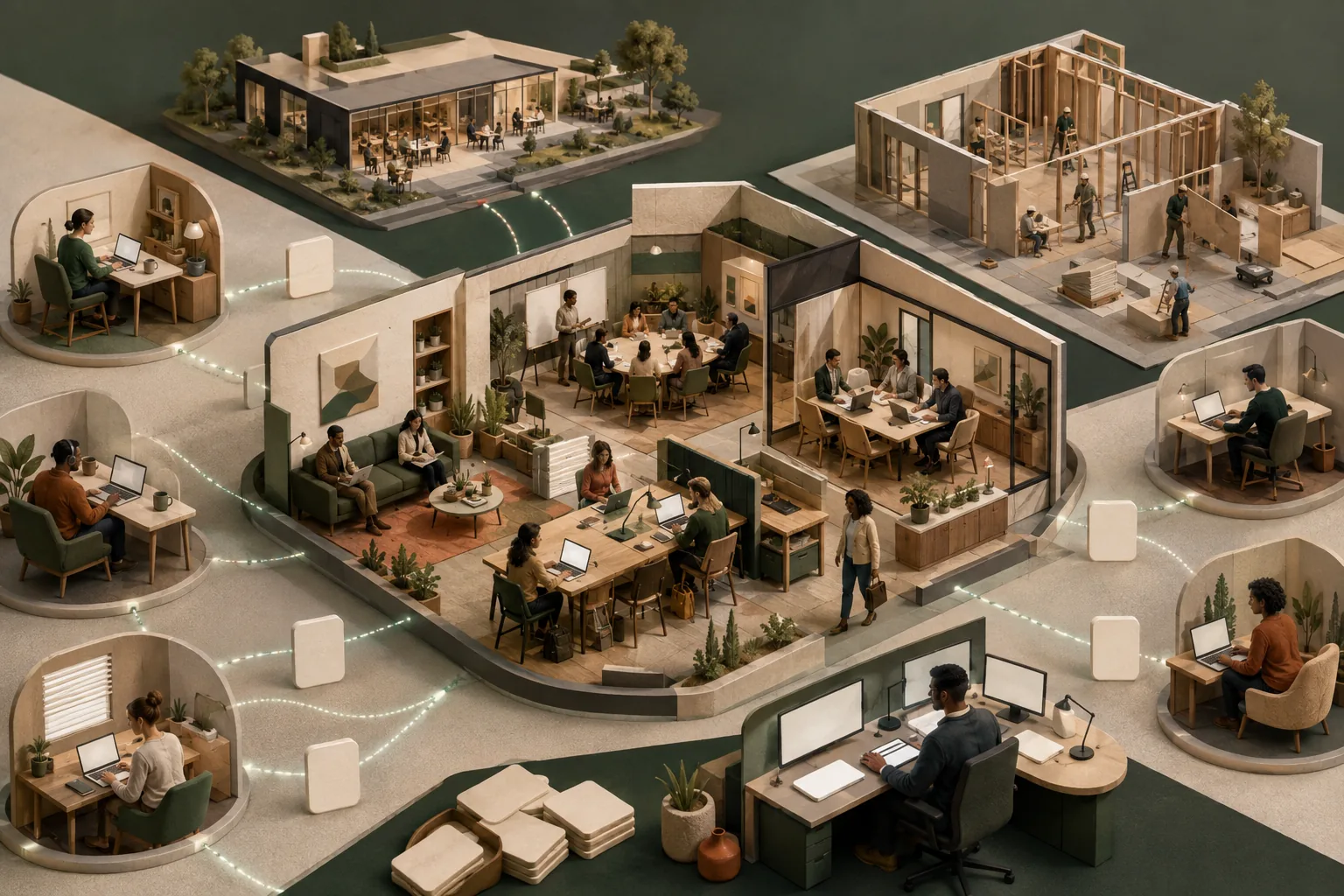
Digital access, physical workspace use and corporate accounts follow separate volume assumptions.
The customer-growth plan determines the budget required to acquire those customers.
A coworking location builds toward its usable capacity rather than starting fully occupied.
The operator share changes when renovation financing has been repaid.
WHY THIS WASN’T A TEMPLATE EXERCISE
The model had to respect
how the business actually moved.
The reconstructed structure separates digital membership, physical adoption and corporate accounts, then gives each location its own fit-out, launch, capacity and financing timeline.
Each revenue stream measured demand differently
Every member received digital access, only a portion used a physical space, and corporate demand depended on company wins and the average workspace requirement per account.
A physical location spent cash before reaching capacity
Lease commitments, renovation activity and site operating costs began on their own timetable, while utilization increased gradually after opening.
Renovation funding changed the operator share over time
A financing contribution covered part of the improvement cost and created one revenue-share period during repayment and another after payoff.
MODEL ARCHITECTURE
From operating activity
to a decision-ready view.
Each layer has one job. Together they keep the commercial story, unit economics and cash consequences on the same timeline.
Customer acquisition
New individual customers and acquisition cost build the annual marketing requirement instead of leaving marketing as an unrelated top-down budget.
Digital membership base
All acquired customers enter the digital workspace schedule, creating the common foundation for the membership relationship.
Physical workspace adoption
A controlled share of the member base becomes physical-space demand and is constrained by available site capacity.
Corporate accounts
New company wins and average workspace demand per company create a separate business-to-business revenue schedule.
Site unit economics
Floor area drives lease and improvement cost, while wages, utilities and other running costs build the operating profile of each location.
Renovation and opening calendar
Fit-out activities, spending and launch dates determine when each planned space can begin its capacity ramp.
Financing waterfall
The funded share of improvements, repayment progress and changing revenue split connect site economics to cash timing.
WHAT THE ANALYSIS SURFACED
Useful answers,
without exposing client data.
The takeaways are intentionally qualitative. Exact assumptions, calculations and outputs remain inside the confidential client model.
A blended member value could hide overlapping revenue
Separating universal digital access from optional physical use keeps the model from treating the same customer relationship as one indistinct average.
Marketing spend followed the acquisition plan
When acquisition cost and new-customer volume are explicit, the growth target carries its own marketing requirement into the cash forecast.
Every site needed a renovation and maturity schedule
Shared unit assumptions make the network repeatable, while different renovation, opening and ramp dates explain why locations contribute differently in the same month.
Financing created two margin periods
The revenue split during renovation-loan repayment differs from the steady-state split, so site margin depends on both operating performance and payoff timing.
MODELING APPROACH
The working system
behind the answer.
- Separate digital, physical and corporate revenue schedules
- Customer acquisition, CAC and marketing-budget engine
- Physical-workspace adoption and site-capacity ramp
- Corporate account and workspace-demand forecast
- Lease, improvement and operating cost by location
- Renovation activity, spending and launch calendar
- Improvement financing and revenue-share waterfall
- Integrated profit, cash and multi-location management view
CASE CONFIDENTIALITY
This anonymized case explains the hybrid membership and coworking rollout logic without naming the company, founder, target community, locations, dates, planned site count, floor area, membership prices, acquisition costs, adoption rates, capacity, lease terms, renovation budget, financing share, revenue-share terms, project fee or schedule. The source brief, workbook, formulas and exact financial outputs remain private. The illustration is an original fictional network rather than a real platform, coworking interior, office portfolio or client location.